

Global Trademark Search and Application Workshop 2013

Posted

By

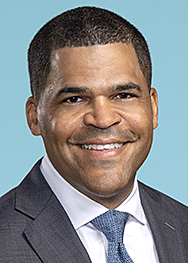
Pillsbury Partner, Richard Kirkpatrick, will be a featured panelist at the upcoming Global Trademark Search and Application Workshop.  The seminar will be providing practical guidance for the trademark search and application process in the U.S. and abroad. 

Using real-world examples, this practice-based, hands-on workshop will get attendees involved and provide takeaway tips that can be put into use in daily practice immediately.  Learn about the differences and similarities of differing search strategies here and abroad using interactive techniques and explore the application process and beyond.

The panel will include the following:

CO-CHAIR(S)
Richard L. Kirkpatrick, Pillsbury Winthrop Shaw Pittman LLP
Anne Hiaring Hocking, Hiaring + Smith, LLP

ADDITIONAL SPEAKERS
Mary Bagnall, Charles Russell LLP
Paul Kretschmar, Vossius and Partner

LOCATION
PLI California Center
685 Market Street
San Francisco, California 94105

SEC OKs Social Media Sites for Financial Disclosures

Posted

By

The Securities and Exchange Commission issued a report that makes clear that companies can use social media outlets like Facebook and Twitter to announce key information in compliance with Regulation Fair Disclosure (Regulation FD) so long as investors have been alerted about which social media will be used to disseminate such information.

According to an SEC press release:

  • The SEC's report confirms that Regulation FD applies to social media and other emerging means of communication the same way it applies to company websites.
  • The SEC issued guidance in 2008 clarifying that websites can serve as an effective means for disseminating information to investors if they've been made aware that's where to look for it.
  • The recent report clarifies that company communications made through social media channels could constitute selective disclosures and, therefore, require careful Regulation FD analysis.
  • Regulation FD requires companies to distribute material information in a manner reasonably designed to get that information out to the general public broadly and non-exclusively. It is intended to ensure that all investors have the ability to gain access to material information at the same time.

According to George Canellos, Acting Director of the SEC's Division of Enforcement "One set of shareholders should not be able to get a jump on other shareholders just because the company is selectively disclosing important information. Most social media are perfectly suitable methods for communicating with investors, but not if the access is restricted or if investors don't know that's where they need to turn to get the latest news."

The SEC's report of investigation stems from an inquiry the Division of Enforcement launched into a post by Netflix CEO Reed Hastings on his personal Facebook page stating that Netflix's monthly online viewing had exceeded one billion hours for the first time. The SEC did not initiate an enforcement action or allege wrongdoing by Hastings or Netflix, citing market uncertainty about the application of Regulation FD in this context.

Click here for a full copy of the SEC Report

For additional information on social media legal issues please contact us.


2013 World Technology Law Conference & Annual Meeting

Posted

By

Pillsbury invites you to join James Gatto and Jenna Karadbil at the 2013 World Technology Law Conference & Annual Meeting on May 1-3, 2013.

SPEAKERS

James Gatto will be leading the Social Media & Games Committee meeting and the interactive workshop that will focus on the need for Social Media Audits.

Jenna Karadbil is speaking on a variety of topics and is currently serving on the Executive Committee for ITechLaw and as the Program Chair for the conference.

The ITechLaw 2013 World Technology Law Conference & Annual Meeting brings together leading lawyers and industry representatives to discuss cutting-edge legal topics. The conference will feature a unique program with sessions led by prominent speakers from around the world, which will focus on bringing you up to speed on the newest technology law developments and their application to your practice.

In addition to the valuable educational offerings, you will enjoy the many networking opportunities and social events every ITechLaw conference provides. The conference's Welcome Reception, formal Gala Dinner and Closing Reception are valued experiences and should not be missed, and excellent venues to meet and catch up with your fellow attendees.

WHO SHOULD ATTEND

·         Technology Lawyers

·         Practicing Attorneys - both private practitioners and in-house counsel

·         Business Managers focusing on the global economy

ITECHLAW.png·         Government Officials

·         Law Professors

·         Law Students

For more information and to register, please visit ITechLaw.


Around the Virtual World: March 25-29, 2013

Posted

By

MP900449113.JPG

A weekly wrap up of interesting news about virtual worlds, virtual goods and other social media.


RUMOR: Google Is Launching An Augmented Reality Based E-Book Line
Google is going to be launching a line of e-books that utilize augmented reality using technology that was developed by Niantic Labs.  Niantic Labs is essentially a start-up subsidiary owned by Google that develops massive multiplayer online video games.

Valve Can't Pull Plug On Video Game Data Breach Suit
A class action accusing video game developer Valve Corp. of failing to adequately protect user information survived a dismissal bid Monday after a Washington federal judge found the plaintiff sufficiently alleged he was harmed by a November 2011 data breach.

British teen sells Summly app for millions
A south London schoolboy has become one of the world's youngest tech millionaires after selling his mobile app to Yahoo!.

Bitcoin, up 152% this month, tops $1 billion in total value
Digital currency bitcoin continues its remarkable and somewhat inexplicable run. It's up 152% this month, and today the total value of all outstanding bitcoins--its market capitalization, if you will--topped $1 billion for the first time before settling back down.

Senate Bill 467 Introduced

Posted

By

California Senator Mark Leno recently introduced Senate Bill 467, a bill that would declare the intent of the Legislature to enact legislation prohibiting a government entity from obtaining the contents of a  wire or electronic communication from a provider of electronic communication service or remote computing service. California Penal Code § 1524 authorizes a court or magistrate to issue a warrant for the search of a place and the seizure of property or things identified in the warrant where there is probable cause to believe that specified grounds exist, and also provides for a warrant procedure for the acquisition of stored communications in the possession of a provider of electronic communication service or remote computing service. Specifically, a search warrant may be issued pursuant to Subsection (a)(7) "[w]hen a provider of electronic communication service or remote computing service has records or evidence, as specified in Section 1524.3, showing that property was stolen or embezzled constituting a misdemeanor, or that property or things are in the possession of any person with the intent to use them as a means of committing a misdemeanor public offense, or in the possession of another to whom he or she may have delivered them for the purpose of concealing them or preventing their discovery." If a search warrant is granted, Section 1524.3 requires the disclosure of the name, address, local and long distance telephone toll billing records, telephone number or other subscriber number or identity, and length of service of a subscriber to or customer of the services, and the types of services the subscriber or customer utilized. Under existing law, a governmental entity receiving subscriber records or information under this Section 1524.3 is not required to provide notice to a subscriber or customer.  S.B. 467 has been referred to the Committee on Rules for assignment.

To read a copy of the S.B. 467, see the Senate Bill.

Join us at the Game Developers Conference!

Posted

By

game-developers-conference-2013.png

Pillsbury is teaming up with Covert & Co. to host an exclusive VIP reception during the Game Developers Conference (GDC) on March 27, 2013 at the W Hotel in San Francisco.  This will be the highest quality private event at GDC, attended by 200 leaders in the game/media sector.  The event will include an exciting "fireside chat" with CEOs of the hottest game companies:  Naoki Aoyagi (CEO of GREE), Ilkka Paananen (CEO of Supercell) and Torsten Reil (CEO of Natural Motion). 

[event is invite-only]

Covert & Co.png


Covert & Co. is a next-generation investment bank providing premium M&A and financing services to media and tech companies globally.  My team and I have a track record that includes landmark M&A transactions such as Aeria Games/Gamepot, Club Penguin/Disney, SRS Labs/DTS, Hearst-UGO/News Corp-IGN, Grouper/Sony, MusicMatch/Yahoo!, MySpace/News Corp., NevenVision/Google, and DailyCandy/Comcast; as well as equity financings for Wildtangent, Realtime Worlds, Meebo, Move Networks and LegalZoom.


Google Ventures.png


Google Ventures is a radically different kind of venture-capital fund. The Google Ventures hands-on teams work with portfolio companies full-time on design, recruiting, marketing, and engineering. Google Ventures also offers Startup Lab, a dedicated facility and educational program where companies can meet, learn, work, and share. Google Ventures invests hundreds of millions of dollars each year in entrepreneurs with a healthy disregard for the impossible.


Pillsbury.jpg


Pillsbury is a full-service law firm with a keen industry focus on technology. Based in the world's major financial, technology and energy centers, Pillsbury counsels clients on global regulatory, litigation and corporate matters. Pillsbury works in multidisciplinary teams that allow them to anticipate trends and bring a 360-degree perspective to complex business and legal issues--helping clients to take greater advantage of new opportunities and better mitigate risk. This collaborative work style helps produce the results clients seek.

FINCEN Issues Virtual Currency Regulations

Posted

By

FINCEN has recently issued what is perhaps the most specific piece of regulatory Guidance on the financial regulatory issues with virtual currencies. This guidance clarifies the applicability of the Bank Secrecy Act ("BSA") to entities creating, obtaining, distributing, exchanging, accepting, or transmitting virtual currencies. These guidelines relate to a wide variety of virtual currencies.

There are a few aspects of this guidance that are surprising to some people. If you are dealing with virtual currency, you must be aware of what these guidelines mean for you.

Register for GSummit 2013 today!

Posted

By

gsummit.pngPlease join us at GSummit 2013 (SF, April 16-18) for 3 days of workshops, sessions, panels and networking dedicated to understanding how to drive behavior in consumers, employees and stakeholders. Top experts in the fields of gamification, loyalty, CRM, enterprise, human resources and training converge at this one-of-a-kind event to share best practices, startling insights and the science of behavior in a unique, engaging and jam-packed format

·         Gamification has become an essential strategy for startups, Fortune 500s and non-profits alike, with investment (and job growth) up over 300% in the last year alone. Come to GSummit (April 16-18) and earn your official gamification design certification, hear detailed practical examples of what works and what doesn't from the experts themselves, network with the world's top gamification designers and vendors, and get inspired. As consumer & employee attention has been harder and harder to obtain, you'll learn how many companies have utilized gamification to create loyal customers & engaged employees. Gamification is becoming a necessary strategy in order to stay competitive and to grow your business--and GSummit is the only place to get this needed, hands-on learning. REGISTER NOW!

James Gatto will be speaking on the topic of "Gamblification: Legal Concerns" which is scheduled for 2:10pm, Thursday, April 18. 


Why You Need a Social Media Audit Now

Posted

By

Most companies have employment policies, various website compliance policies and other audit and compliance practices to mitigate risk. Many companies have not yet integrated social media into those policies. Of those that have made some attempt to do so, most have ineffectively or incompletely done so. In fact, a Wall Street Journal report indicates that in a recent Protiviti survey of internal audit professionals, more than half do not assess social media risk and of the ones that do 80% admit to less than fully effective capabilities.

In a climate where regualtory actions are increasing, you can not read the daily tech/legal news without seeing another enforcement action for social media violations. Record fines are being levied. Dont be the next target. There is no time like now to mitigate your risk.

We have previously written about some of the reasons that companies need to conduct legal audits of social media risks and develop effective policies to do so. Pillsbury's Social Media team has a cost-effective approach to doing so. 

To see our recent presentation on Social Media Audits please click here http://www.youtube.com/watch?&autoplay=1&v=_Uts2BT542M#t=2489s.

Questions? Contact Us.

FTC Updates Mobile and Online Advertising Guidelines

Posted

By

federal-trade-commission-ftc-logo.pngOn March 12th, the Federal Trade Commission issued a report updating its mobile and online advertising guidelines.  The recently issued report was a follow-up to the year 2000 "Dot Com Disclosures" to address the marked technical and legal changes that have occurred in the past 13 years.  The FTC guidelines emphasize that no matter how technology changes the delivery of content, consumer protection laws continue to apply equally "across all mediums, whether delivered on a desktop computer, a mobile device, or more traditional media such as television, radio, or print."  The intent of the report is to assist advertisers to better identify when a disclosure is needed in connection with social media ads and how best to ensure that any disclosures are conspicuous and not deceptive.  In order to maximize its usefulness, the report used more than 20 mock ads to illustrate the updated principles.

The FTC report advises that advertisers should ensure that clear and conspicuous disclosures are made on all devices and platforms that an advertisement can be accessed on and if the disclosure cannot be made clearly and conspicuously on a particular device or platform, then that device or platform should not be used.  Not only does the new report take into account the space limitations inherent in certain social media sites, like Twitter, but also the growing user viewing habits of content make available on small screen smartphones.  "The new guidance points out that advertisers using space-constrained ads, such as on some social media platforms, must still provide disclosures necessary to prevent an ad from being deceptive, and it advises marketers to avoid conveying such disclosures through pop-ups, because they are often blocked," the FTC said.  In order to accomplish this in a better form the report suggests that an advertiser can include "Ad" or "Sponsored" before the message itself.  Additionally, the report admonished advertisers to consider whether a consumer will be able to view any disclaimers if it is required to "zoom-in" to read any part of the ad.  However, the new report is slightly more flexible when dealing with smaller screens by, allowing advertisers to make sure disclosures are "as close as possible" to the ad claim instead of the original guidelines which discussed having disclaimers "near or on the same page" as the advertisement.

If you have any questions about the new FTC guidelines and how they may affect your business Pillsbury would be happy to speak with you about them.  

SEC Provides Guidance on Investment Company Social Media Filing Obligations

Posted

By

On March 15, the Securities and Exchange Commission (SEC) issued the first in a new series of guidance releases aimed at addressing emerging legal issues.  In that edition of "IM Guidance Update", the SEC focused on clarifying filing and disclosure requirements associated with investment companies' use of social media, identifying several types of electronic communications and materials on investment companies' websites that are not required to be filed for review by the Financial Industry Regulatory Authority (FINRA). This release comes, according to the SEC, because many such organizations have been filing materials located on their social media sites with FINRA "out of an abundance of caution". You can read the SEC's press release and access the full IM Guidance Update: SEC Issues Guidance Update on Social Media Filings by Investment Companies.

Game Business & Legal Affairs Conference

Posted

By

VGBA.pngSean F. Kane will be a featured panelist at the upcoming Video Game Bar Association's inaugural Game Business & Legal Affairs conference. The conference will provide an in-depth analysis of the prevalent and pertinent legal and business issues within the video game industry.

Sean will be serving as a panelist during the "Adventures in Finance" session which will take place on Tuesday, May 21st at 9:00am.  Working capital drives development, and this panel looks at the finance landscape, including new trends and legal details for crowdfunding, raising venture capital, structure of exits, and where tax credits for development and research can be maximized across an organization.

The panel will include the following:


MODERATOR

Steve Goldstein, Chair, Interactive Entertainment and Video Games Practice at Stubbs Alderton & Markiles


PANELISTS

Justin Bailey, VP of Business Development at Double Fine Productions

Sean F. Kane, Attorney at Pillsbury Winthrop Shaw Pittman

Mark Stevens, Partner at Fenwick & West

Federal Court Sets Guidelines for Denying Attorney-Client Privilege on Communications

Posted

By

Hiring a lawyer for a general counsel role - either in-house or by retaining outside counsel to perform that role - can benefit organizations in countless ways. Unlike outside attorneys who are consulted on a piecemeal basis, corporate or general counsel are very familiar with the organization's operations, leadership, and goals. Because they are often privy to and included in discussions of key business decisions and developments, they can ground their legal advice on a thorough understanding of the organization and its history. That intimate connection to the organization's business life, however, operates as a double-edged sword. As some court decisions illustrate, the regular inclusion of general counsel in business communications can strip communications with corporate counsel of the presumption that they are protected by attorney-client privilege.

For more information, please click here.

National Labor Relations Board on Employer Social Media Policies

Posted

By and

social-media-work.jpgAs use of social media continues to increase, so do concerns by employers regarding employee use of social media as it relates to the workplace. In response, many employers are drafting new or revised policies covering use of social media particularly as it pertains to confidentiality, privacy, intellectual property, and contact with the media and government agencies.

The Acting General Counsel of the National Labor Relations Board ("NLRB"), Lafe Solomon, has released a report on employer social media policies.  In many cases, some or all provisions of employers' policies governing the use of social media by employees have been found to be unlawful. Provisions are found to be unlawful when they interfere with the rights of employees under the National Labor Relations Act. Consider the following examples, which may be surprising.

In one case, the NLRB addressed an employer's rules on communication of confidential information via social media.  The employer's social media policy provided in relevant part:

If you enjoy blogging or using online social networking sites such as Facebook and YouTube, (otherwise known as Consumer Generated Media, or CGM) please note that there are guidelines to follow if you plan to mention [Employer] or your employment with [Employer] in these online vehicles . . . Don't release confidential guest, team member or company information. . . .

The NLRB concluded these rules were unlawful as they could chill the exercise of Section 7 rights (e.g., self-organization, collective bargaining, etc.) in violation of the National Labor Relations Act. More specifically, the instruction that employees not "release confidential guest, team member or company information" was interpreted as prohibiting employees from discussing and disclosing information regarding their own conditions of employment as well as the conditions of employment of employees other than themselves.

In another case, the NLRB focused on an employer's social medial policy for protecting company information, which provided in relevant part:

Employees are prohibited from posting information regarding [Employer] on any social networking sites (including, but not limited to, Yahoo finance, Google finance, Facebook, Twitter, LinkedIn, MySpace, LiveJournal and YouTube), in any personal or group blog, or in any online bulletin boards, chat rooms, forum, or blogs (collectively, 'Personal Electronic Communications'), that could be deemed material nonpublic information or any information that is considered confidential or proprietary. Such information includes, but is not limited to, company performance, contracts, customer wins or losses, customer plans, maintenance, shutdowns, work stoppages, cost increases, customer news or business related travel plans or schedules. Employees should avoid harming the image and integrity of the company and any harassment, bullying, discrimination, or retaliation that would not be permissible in the workplace is not permissible between co-workers online, even if it is done after hours, from home and on home computers. . . .

The rule prohibiting employees from posting information regarding the employer that could be deemed "material non-public information" or "confidential or proprietary" was found unlawful by the NLRB. This was chiefly due to the terms "material non-public information" and "confidential or proprietary" being vague and/or overbroad, and the associated risk of limiting Section 7 rights.

Some other trends in the guidance provided by the NLRB include that expression of opinions by employees is largely protected, and prohibitions on activities in social media used by unions for communication or organization are particularly safeguarded.  On the other hand, the guidance appears to enable employers to protect themselves against "rants" by individual employees, and to enforce important workplace policies (like sexual harassment, workplace violence, and/or other workplace policies) in employee use of social media.

As can be seen from the examples above, employers should work with counsel to carefully craft their social media policies to both protect their own interests while not impeding employee rights under the National Labor Relations Act.

PokerStars Puts in Bid to Buy Brick & Mortar Casino

Posted

By

The parent company of online poker site PokerStars has put in a bid to buy the brick & mortar based The Atlantic Club Casino in Atlantic City, New Jersey. This appears to be the first time an online-only gambling site operator has attempted to buy a land-based operation. It remains to be seen whether the bid will be accepted, as it is already being challenged by the American Gaming Association (which represents land-based casinos). http://news.yahoo.com/pokerstars-ac-bid-sparks-battle-153442498.html